
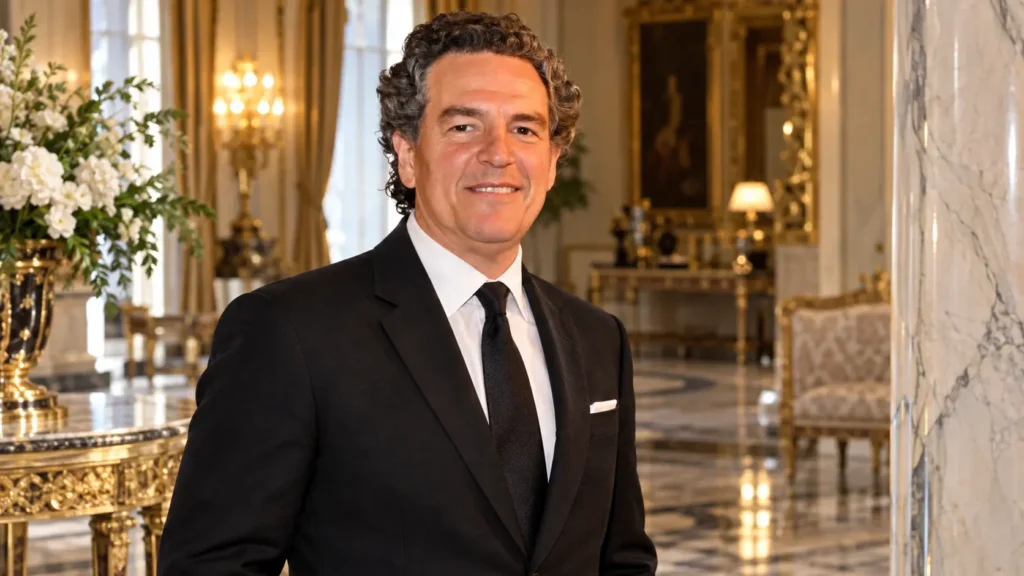
Carlos Scola Pliego is a Spanish filmmaker whose name remains connected to cinema and singer Sade Adu. He worked mainly behind the camera, taking roles in assistant directing, writing, production, and filmmaking. His professional credits include several Spanish and international productions from the 1980s and later years. However, many people first discovered his name because
Carlos Scola Pliego is a Spanish filmmaker whose name remains connected to cinema and singer Sade Adu. He worked mainly behind the camera, taking roles in assistant directing, writing, production, and filmmaking. His professional credits include several Spanish and international productions from the 1980s and later years. However, many people first discovered his name because of his marriage to Sade Adu in 1989. Unlike his former wife, Carlos has maintained a very private public profile. As a result, reliable information about his early life is limited. His film career, however, provides useful details about his professional background and creative work.
Who Is Carlos Scola Pliego? A brief biography
| Biography Detail | Information |
|---|---|
| Full Name | Carlos Scola Pliego |
| Professional Name | Carlos Scola |
| Nationality | Spanish |
| Profession | Filmmaker, Director, Writer, Assistant Director |
| Known For | Film career and marriage to Sade Adu |
| Film Industry | Spanish and international cinema |
| Notable Work | Never Say Never Again, Curse of the Pink Panther, Christopher Columbus |
| Director Credits | Donde termina el corazón, Ngira: Gorilas en la montaña |
| Writer Credits | Donde termina el corazón, Ngira: Gorilas en la montaña |
| Former Spouse | Sade Adu |
| Marriage Year | 1989 |
| Divorce Year | 1995 |
| Spouse’s Profession | Singer, Songwriter, Performer |
| Career Period | Primarily active from the late 1970s through the 1990s and beyond |
| Professional Focus | Film production, directing, writing, documentary filmmaking |
Who Is Carlos Scola Pliego?
Carlos Scola Pliego is a Spanish film professional who worked in several behind-the-scenes roles. Film records often list him simply as Carlos Scola, while other records use his full name. His work includes assistant directing, script supervision, writing, producing, and directing. These roles show that his career was broader than a single position within the film industry. He contributed to both Spanish productions and international projects during his working years. Although his professional work gives researchers useful information, his personal biography remains much less documented. This difference is important when reading online profiles because many websites repeat personal details without clearly identifying reliable sources.
Carlos became more widely known after his relationship with Sade Adu, the British-Nigerian singer and songwriter. Sade’s official biography identifies Carlos as a Spanish film director and confirms that they married in 1989. Their relationship attracted attention because Sade became internationally successful while Carlos remained largely outside the entertainment spotlight. Still, describing him only through his marriage leaves out an important part of his story. His film credits demonstrate an established professional career that existed independently of his relationship. For readers researching Carlos Scola Pliego, his filmmaking background and documented production work provide a more complete understanding of his public identity. Read More : Daniel John Gregory
Carlos Scola Pliego’s Early Life and Background
Very little reliable information is available about Carlos Scola Pliego’s early childhood. Public sources consistently describe him as Spanish, while Spanish reporting has connected him with Madrid. However, dependable sources do not clearly establish his exact birth date, childhood experiences, parents, siblings, or detailed family history. Some websites publish precise personal information, but these claims often lack strong supporting documentation. Therefore, it is better to separate confirmed information from details that remain uncertain. His professional record is considerably stronger than the available record of his private upbringing. This makes his career the most reliable starting point for understanding his life and long-term connection with the film industry.
Information about Carlos Scola Pliego’s formal education is also limited. There is no widely verified public record clearly identifying a film school, university, or specific filmmaking program that he attended. What can be established is that he developed practical experience across different production roles. His early work involved responsibilities such as script supervision and assistant directing, which require close knowledge of filmmaking processes. Over time, those experiences supported his movement toward directing and writing. Therefore, his professional development appears easier to trace through film credits than through academic records. Readers should be cautious with websites that present an exact educational history without identifying a reliable source.
How Did Carlos Scola Pliego Start His Film Career?
Carlos Scola Pliego’s film career developed mainly behind the camera. Available film records connect him with production work during the late 1970s and early 1980s. He worked in script supervision and assistant-director positions before taking on broader creative responsibilities. Script supervision is an important production role because it helps maintain continuity between scenes, including actions, dialogue, costumes, and props. Assistant directors also help organize filming and coordinate different parts of production. These early responsibilities gave Carlos practical experience within professional film sets. His career path therefore developed through hands-on production work rather than through a public-facing acting career.
As his experience grew, Carlos worked on productions with larger international connections. His documented credits include Never Say Never Again, Curse of the Pink Panther, Eleni, and the television miniseries Christopher Columbus. These projects placed him within a wider international production environment. Working on such productions could involve coordination among directors, actors, technical teams, and production departments. Carlos’s roles were generally behind the scenes, which explains why his name is less familiar than the stars connected with these projects. Nevertheless, his credits demonstrate that he participated in professional productions that reached audiences beyond Spain. His film career therefore deserves attention independently from his personal relationship with Sade Adu.
Carlos Scola Pliego’s Work as a Director
Carlos Scola Pliego eventually moved beyond production support and took on directing responsibilities. Film records connect him with projects including Ngira: Gorilas en la montaña and Donde termina el corazón. These works show another side of his career because directing requires responsibility for creative decisions, storytelling, visual presentation, and overall production. His move toward directing also demonstrates how professionals can develop through different filmmaking departments before leading projects themselves. While his directing work did not create the same level of international celebrity as Sade Adu’s music, it remains an important part of his professional biography. It provides evidence of his creative involvement beyond assistant-director roles.
Documentary filmmaking also gave Carlos an opportunity to focus on subjects outside mainstream entertainment. Ngira: Gorilas en la montaña is associated with documentary filmmaking and reflects an interest in natural and environmental subjects. This type of production differs from commercial feature filmmaking because documentaries often depend heavily on real locations, real events, and observational storytelling. Carlos’s involvement therefore adds variety to his professional record. His career included production work, international film projects, and documentary direction. For readers interested in filmmaking careers, his path offers an example of how someone can move between practical production roles and more creative responsibilities over time.
Carlos Scola Pliego and Sade Adu
Carlos Scola Pliego became much more recognizable to the general public because of his marriage to Sade Adu. Sade’s official biography confirms that the singer married the Spanish film director in 1989. Their relationship brought together two creative professionals from different parts of the entertainment world. Sade was building her reputation as an internationally successful recording artist, while Carlos worked in film production and direction. Their marriage therefore became an interesting part of both public biographies. However, much of their private relationship was never extensively documented. Reliable sources provide the basic timeline, but many personal details about their life together remain unavailable or uncertain.
The marriage eventually ended in divorce, with available biographical records placing the separation in 1995. Because Sade has always maintained a relatively private personal life, detailed accounts of the relationship are limited. Carlos also avoided becoming a major media personality, so there are few extensive interviews explaining his perspective. This means that many online stories about their relationship should be read carefully. The confirmed facts are the marriage in 1989 and the later end of the relationship. Beyond those points, reliable public information becomes much thinner. Readers searching for Carlos Scola Pliego should therefore avoid treating repeated online claims as established facts without supporting evidence.
Carlos Scola Pliego’s Private Life
Privacy is one of the strongest themes in Carlos Scola Pliego’s public biography. Unlike many people connected to famous entertainers, he did not build a large public identity around his personal life. His professional work is easier to document than his daily activities, family relationships, or personal interests. This limited public record has created space for speculation online, especially about his age, education, finances, and current lifestyle. However, responsible biography writing should not turn missing information into invented facts. Where reliable sources are silent, the most accurate approach is to acknowledge that the information remains unavailable. This helps readers understand the difference between documented history and online speculation.
The same principle applies to claims about Carlos’s present circumstances. There is limited reliable public information describing his current residence, professional activities, or private routines. Some websites make detailed claims about his current life, but those statements are not consistently supported by authoritative sources. His low public profile means that a lack of recent information should not automatically be interpreted as evidence of a particular situation. Instead, it simply shows that he has remained outside regular media coverage. Readers interested in celebrity biographies can also explore related topics through internal articles about Sade Adu’s biography, Sade Adu’s career, and famous celebrity relationships.
What Makes Carlos Scola Pliego’s Career Interesting?
Carlos Scola Pliego’s career is interesting because it developed across several different filmmaking roles. He was not limited to directing or writing alone. His professional record includes script supervision, assistant directing, production work, writing, and directing. This range shows how filmmaking careers can develop through practical experience in different departments. Working behind the camera also means that professionals may contribute significantly without becoming widely recognized by audiences. Carlos’s career provides an example of that pattern. His name may not be as familiar as the stars associated with his projects, but his production credits show meaningful involvement in the filmmaking process.
Another notable part of his career is the combination of Spanish and international production work. His credits connect him with projects made for different audiences and production environments. This suggests that his professional experience extended beyond one narrow area of Spanish cinema. His later documentary work also shows a shift toward projects with different storytelling needs. Taken together, these credits create a broader picture of Carlos as a film professional rather than simply a famous singer’s former husband. For readers researching his biography, the most useful approach is to consider his marriage and his film career as separate but connected parts of his public story.
Carlos Scola Pliego: Facts About His Life Today
Information about Carlos Scola Pliego today remains limited. Unlike Sade Adu, who continues to attract regular public interest because of her music career, Carlos has largely stayed away from mainstream media attention. Available sources do not provide a dependable picture of his current professional schedule, residence, or personal activities. As a result, claims about what he currently does should be treated carefully unless supported by recent, reliable documentation. His historical film credits remain the strongest evidence available about his professional identity. This limited information also explains why online searches often produce conflicting answers about his age, wealth, and personal circumstances.
There is also no dependable public figure that establishes Carlos Scola Pliego’s current net worth. Online estimates vary, and many do not explain how their numbers were calculated. A reliable biography should therefore avoid presenting an unsupported financial figure as fact. The same caution applies to claims about his current relationships, children, or residence. What can be stated with greater confidence is that Carlos built a career in filmmaking and became publicly known through his marriage to Sade Adu. His private approach has kept many details away from public records, making accuracy especially important when discussing his life today.
Frequently Asked Questions
Who is Carlos Scola Pliego?
Carlos Scola Pliego is a Spanish filmmaker known for behind-the-camera work and his former marriage to singer Sade Adu.
When did Carlos Scola Pliego marry Sade Adu?
Carlos Scola Pliego married Sade Adu in 1989, according to Sade’s official biography.
What movies did Carlos Scola Pliego work on?
His documented credits include Never Say Never Again, Curse of the Pink Panther, Eleni, and Christopher Columbus.
Did Carlos Scola Pliego direct films?
Yes, film records credit Carlos with directing projects including Ngira: Gorilas en la montaña and Donde termina el corazón.
What is known about Carlos Scola Pliego today?
Reliable public information about his current personal life, location, finances, and activities remains limited.
Conclusion
Carlos Scola Pliego is remembered for two connected parts of his public story. First, he built a career as a Spanish film professional working behind the camera in several production roles. His credits include international projects, assistant-director work, and later directing assignments. Second, his marriage to Sade Adu brought much greater public attention to his name. They married in 1989 before later divorcing in 1995. Despite that connection, Carlos has maintained a notably private profile. Reliable information about his early life and current circumstances remains limited. For readers interested in his story, focusing on documented film work and confirmed relationship details provides the clearest and most trustworthy picture.
1 comment
















1 Comment
Jack Daniel Byrne: Life, Family and Music Career - Publiora
September 21, 2026, 6:44 am[…] Carlos Scola Pliego: Biography, Career and Life […]
REPLY