
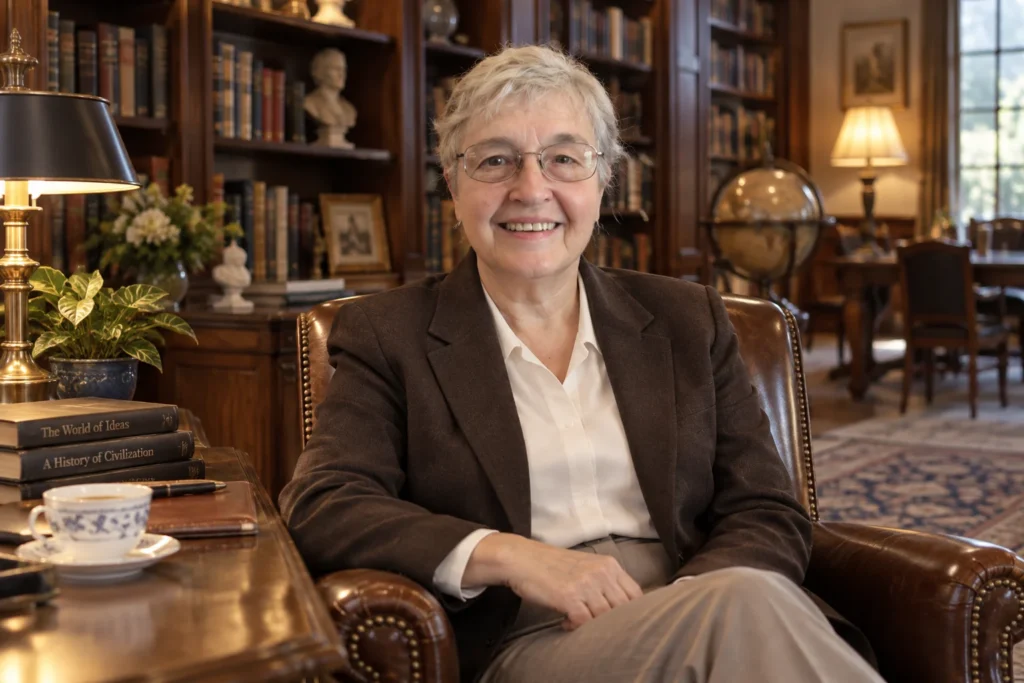
Sherrill Redmon is an American scholar and archivist best known for her work preserving women’s history. Many people first discover Sherrill Redmon because of her former marriage to politician Mitch McConnell. However, her professional life developed far beyond that relationship. She built a respected career connected with history, archives, feminism, and oral history. Redmon served
Sherrill Redmon is an American scholar and archivist best known for her work preserving women’s history. Many people first discover Sherrill Redmon because of her former marriage to politician Mitch McConnell. However, her professional life developed far beyond that relationship. She built a respected career connected with history, archives, feminism, and oral history. Redmon served as director of the Sophia Smith Collection at Smith College from 1993 until her retirement in 2012. The collection preserves important records about women and social movements. Her work helped bring greater attention to stories that might otherwise have remained overlooked. Today, her name remains connected with women’s historical scholarship.
Who Is Sherrill Redmon? A brief biography
| Biography Detail | Sherrill Redmon |
|---|---|
| Full Name | Sherrill Lynn Redmon |
| Birth Date | February 6, 1943 |
| Birthplace | Louisville, Kentucky, United States |
| Nationality | American |
| Profession | Historian, Archivist, Feminist Scholar |
| Education | University of Louisville; University of Kentucky |
| Academic Field | History and Women’s History |
| Known For | Women’s history scholarship and archival work |
| Former Husband | Mitch McConnell |
| Marriage | 1968 |
| Divorce | 1980 |
| Children | Elly McConnell, Claire McConnell, Porter McConnell |
| Institutional Affiliation | Smith College |
| Major Role | Director of the Sophia Smith Collection |
| Career Focus | Women’s history, feminist scholarship, archival preservation |
| Notable Project | Voices of Feminism Oral History Project |
| Collaborator | Gloria Steinem |
| Retirement | 2012 |
| State Associated With Career | Massachusetts, United States |
| Parents | Charles Redmon and Doris Redmon |
| Siblings | Walter Redmon, David Redmon, Lee Ann Redmon |
Who Is Sherrill Redmon?
Sherrill Redmon is a former academic and archivist whose career focused strongly on women’s history. She became widely known outside academic circles because she was once married to Mitch McConnell, the longtime Kentucky politician. Their marriage lasted from 1968 to 1980, and they had three daughters together. However, describing Sherrill Redmon only through her former husband overlooks her independent professional achievements. Her later career at Smith College placed her among people working to preserve documents, photographs, oral histories, and other records connected with women’s experiences. This work gave her a meaningful place in historical research and archival preservation.
The public record about Sherrill Redmon is stronger when discussing her professional work than her private life. Smith College materials identify her as director of the Sophia Smith Collection and highlight her involvement in projects concerning women’s history. University of Kentucky alumni records also confirm that she earned a Ph.D. and later retired from Smith College in 2012. These institutional records provide a more dependable foundation than many online celebrity-style biographies. They also show why Sherrill Redmon deserves attention for her own career rather than simply her connection to American politics. Readers researching her life should therefore prioritize academic and institutional information whenever possible. Read More : Miliane Desaulniers
Early Life and Education of Sherrill Redmon
Details about Sherrill Redmon’s early childhood are less extensively documented than her later professional career. Many online biographies place her birth in Louisville, Kentucky, in 1943. However, specific personal details should be treated carefully unless they are supported by reliable records. What is clearer is her connection to Kentucky and her later academic path. Her education became an important foundation for the work she eventually pursued. Rather than building a career in politics, she developed interests connected with history, scholarship, women’s experiences, and the preservation of historical materials. Those interests later became central to her professional identity.
Sherrill Redmon studied at the University of Louisville before completing doctoral work at the University of Kentucky. A University of Kentucky history alumni publication identifies her as a Ph.D. graduate from 1974. Her academic background helped prepare her for research and historical analysis. One documented academic work associated with her doctoral period concerns W. E. Woodward and his writings. This part of Sherrill Redmon’s story is important because it demonstrates that her professional interests existed independently of her later public association with Mitch McConnell. Her education gave her the research skills that became valuable in archival and women’s history work.
Sherrill Redmon and Mitch McConnell
Sherrill Redmon married Mitch McConnell in 1968, before he became one of the most prominent figures in the United States Senate. Their marriage lasted until 1980. During those years, McConnell was developing his political career in Kentucky, while Redmon pursued her own academic interests. The couple had three daughters: Eleanor, Claire, and Porter. Their family connection is one of the main reasons Sherrill Redmon remains a frequently searched name. Still, her biography should not be reduced to being a former political spouse. Her later professional achievements created a separate identity that became increasingly important after the marriage ended.
The relationship between Sherrill Redmon and McConnell has attracted attention because their later public identities followed different directions. McConnell became a major Republican political leader, while Redmon became involved in feminist scholarship and women’s historical archives. Their divorce in 1980 marked a new period in Redmon’s life. Rather than remaining defined by her former marriage, she developed a career centered on preserving women’s voices and experiences. This contrast is often part of the public interest surrounding her biography. Yet the most lasting evidence about her career comes from institutions such as Smith College, where her archival work received significant recognition.
Sherrill Redmon’s Career at Smith College
One of the most important parts of Sherrill Redmon’s professional life was her leadership of the Sophia Smith Collection at Smith College. She became its director in 1993 and remained in that position until 2012. The collection is dedicated to women’s history and includes manuscripts, photographs, publications, oral histories, and other primary materials. During Redmon’s leadership, the collection continued developing as a major research resource. Her role involved more than organizing old documents. It also included helping researchers understand women’s experiences and supporting projects that brought overlooked voices into historical discussions.
Sherrill Redmon also participated in public programs connected with the Sophia Smith Collection. Smith College records show her introducing events, discussing women’s history, and contributing to projects involving historical figures and activists. She was involved with the Voices of Feminism Oral History Project, which collected firsthand accounts from women involved in social movements. These efforts helped preserve experiences that traditional historical records sometimes leave out. The importance of this work becomes clear when considering how easily personal stories can disappear over time. Redmon’s archival career helped create a lasting record for researchers, students, and future generations interested in women’s history.
Feminist Scholarship and Women’s History
Sherrill Redmon became closely associated with feminist scholarship through her work at Smith College. Her role placed her alongside historians, activists, writers, and researchers interested in documenting women’s experiences. The Sophia Smith Collection preserved materials covering women’s rights, professional lives, social reform, political activity, and cultural history. Redmon helped support this mission through research assistance, public programs, and archival development. Her work illustrates an important point about history: valuable stories are not always found in famous speeches or government records. Personal papers, photographs, letters, interviews, and organizational documents can also reveal how social change happened.
The work associated with Sherrill Redmon also emphasized voices that had often received less attention. Smith College materials describe programs involving activists from different backgrounds and movements. Redmon participated in efforts to preserve their experiences and make them available for historical research. This approach helped broaden the understanding of women’s history beyond a small group of famous personalities. Her work therefore had practical value for scholars studying feminism, equality, social movements, and American culture. Readers interested in related topics may also explore our article about women’s history and feminist scholarship for additional background on how archives preserve important social stories.
Voices of Feminism and Oral History
A significant part of Sherrill Redmon’s professional legacy involves oral history. Oral history allows people to describe their experiences in their own words, creating records that can complement traditional documents. At Smith College, Redmon was connected with the Voices of Feminism Oral History Project. The project included interviews with activists whose experiences helped explain the development of modern feminist movements. These interviews became valuable historical resources because they captured personal memories, perspectives, and details that might not appear in formal publications. Redmon’s involvement demonstrated the importance of listening carefully to people whose contributions shaped social change.
Sherrill Redmon’s archival work also involved building relationships with activists and encouraging them to preserve their papers. Smith College records describe her role in helping bring materials from women’s rights activists into the collection. One example involves Loretta Ross, whose papers and oral history became part of the institution’s resources. These efforts show how archival work depends on trust as well as organization. People must feel confident that their records will be preserved responsibly. By supporting that process, Redmon helped strengthen the historical record surrounding women’s activism and social movements.
Sherrill Redmon’s Retirement and Later Life
Sherrill Redmon retired from Smith College in August 2012 after serving for many years as director of the Sophia Smith Collection and coordinator of special collections. A University of Kentucky alumni publication confirms her retirement and describes her reflections on leaving the position. Her retirement marked the end of a long professional chapter, but it did not erase the influence of the work she had already completed. The archival collections, oral histories, research materials, and public programs developed during her career continue to provide resources for people studying women’s history. Her professional contribution therefore extends beyond the years when she officially held the director position.
Information about Sherrill Redmon’s life after retirement is comparatively limited in reliable public sources. This is an important distinction because many online biographies make claims about private lives without providing strong evidence. A trustworthy profile should not invent details about her current residence, daily activities, finances, or personal relationships. What can be established is that her retirement followed a substantial career at Smith College. Her public legacy remains closely connected with archival preservation and women’s history. Readers searching for current personal information should remember that limited public information can reflect privacy rather than a lack of accomplishment or significance.
Why Sherrill Redmon’s Work Matters
The importance of Sherrill Redmon’s career can be understood through the purpose of historical archives. Archives preserve original materials so future researchers can study how people lived, organized, worked, and created social change. The Sophia Smith Collection has gathered extensive material about women’s lives and movements. During Redmon’s leadership, the collection served researchers interested in women’s equality, professional achievements, political activity, and social reform. Her work helped maintain an environment where these records could be preserved and studied rather than forgotten. This makes her contribution relevant not only to feminist history but also to broader American cultural and social research.
Sherrill Redmon also represents an interesting example of how a person’s public identity can change over time. Early public attention focused heavily on her marriage to Mitch McConnell. Later, her academic and archival career became the stronger part of her professional story. This shift demonstrates why biographies should consider a person’s full career rather than focusing only on relationships with famous people. For readers researching public figures, our guide to writing accurate celebrity biographies offers useful principles for separating documented achievements from assumptions. Redmon’s story is a reminder that important work can happen quietly, away from political offices and entertainment headlines.
Frequently Asked Questions About Sherrill Redmon
Who is Sherrill Redmon?
Sherrill Redmon is an American scholar and archivist known for her work in women’s history. She served as director of the Sophia Smith Collection at Smith College from 1993 to 2012. She is also known publicly as the former wife of Mitch McConnell.
Was Sherrill Redmon married to Mitch McConnell?
Yes. Sherrill Redmon and Mitch McConnell married in 1968 and divorced in 1980. They had three daughters together: Eleanor, Claire, and Porter.
What did Sherrill Redmon do at Smith College?
Sherrill Redmon served as director of the Sophia Smith Collection. Her work focused on preserving women’s history, supporting archival research, and developing projects involving oral histories and feminist activism.
When did Sherrill Redmon retire?
Sherrill Redmon retired from her Smith College position in August 2012. University of Kentucky alumni records identify her retirement and her previous role as director of the Sophia Smith Collection.
What is Sherrill Redmon known for?
Sherrill Redmon is best known professionally for preserving women’s history through archival work. Her career included leadership of the Sophia Smith Collection and involvement with oral history projects documenting feminist activists and women’s experiences.
Conclusion
Sherrill Redmon’s story extends well beyond her former marriage to Mitch McConnell. Her strongest professional legacy comes from years of academic and archival work focused on women’s history. As director of the Sophia Smith Collection, she helped preserve documents, oral histories, and personal records that continue to support historical research. Her involvement with feminist oral history also helped bring firsthand experiences into the historical record. Although many details about her private life remain limited, her professional achievements are well documented through institutional sources. For anyone researching Sherrill Redmon, the most useful approach is to focus on her education, archival career, and contribution to women’s history rather than unverified personal claims.














Leave a Comment
Your email address will not be published. Required fields are marked with *