The phrase new software Meetshaxs has recently attracted attention from people searching for information about an emerging technology platform. Available online descriptions are not fully consistent, so it is important to separate reported information from independently verified facts. Some MeetShaxs pages describe a productivity and operations platform, while other pages discuss software for product naming
The phrase new software Meetshaxs has recently attracted attention from people searching for information about an emerging technology platform. Available online descriptions are not fully consistent, so it is important to separate reported information from independently verified facts. Some MeetShaxs pages describe a productivity and operations platform, while other pages discuss software for product naming and decision-making. Because public documentation appears limited, readers should avoid assuming every advertised feature belongs to one confirmed product. This guide explains what is currently reported about MeetShaxs, where its possible uses may fit, and what users should check before adopting unfamiliar software for important work.
What Is New Software Meetshaxs?
New software Meetshaxs is presented online as an emerging software concept rather than a widely established product with extensive independent documentation. One MeetShaxs website describes the platform as an operational hub designed to bring projects, tasks, communication, automation, analytics, and collaboration together. Another page describes MeetShaxs differently, focusing on product naming meetings, brainstorming, voting, validation, and decision-making. These descriptions suggest that the name may currently be associated with multiple software concepts or publications. Therefore, users should identify the exact product and provider before making assumptions about its capabilities, pricing, security, integrations, or availability.
The limited public information also means that some claims should be treated cautiously. A recent independent article notes that MeetShaxs does not yet have the broad documentation footprint of established software products. This does not automatically mean the software is unreliable. New products can begin with small audiences, private testing, or limited releases. However, responsible research matters when software could handle company information, customer data, financial records, or internal communications. Before signing up, users should look for clear documentation, an identifiable provider, privacy information, support details, and understandable terms. Those checks help separate a genuine emerging product from vague online claims. Read More : Sitemap Generator by Spellmistake: Complete Guide
Why Is Meetshaxs Getting Attention?
Interest in new software Meetshaxs appears connected with the growing demand for tools that simplify digital work. Modern teams often move between communication platforms, project management systems, documents, calendars, and reporting tools. This can create unnecessary switching and make information difficult to locate. A MeetShaxs article presents the platform as an operational hub intended to bring different work activities into one environment. That idea fits a broader software trend toward centralized workflows. Instead of opening several applications, teams increasingly want one workspace where they can see tasks, track progress, communicate with colleagues, and automate repetitive activities.
Another reason for curiosity may be the name’s appearance across different technology articles. Search results include pages discussing MeetShaxs software, software improvements, business productivity, and even product naming. This makes the keyword interesting but also creates confusion. Users should not combine every claim into one feature list without checking the source. If someone is researching the platform for business use, a software comparison guide can help establish what alternatives offer similar functions. Comparing verified capabilities is more useful than relying only on promotional descriptions. The goal should be finding the right tool for a specific workflow.
Reported Features of Meetshaxs
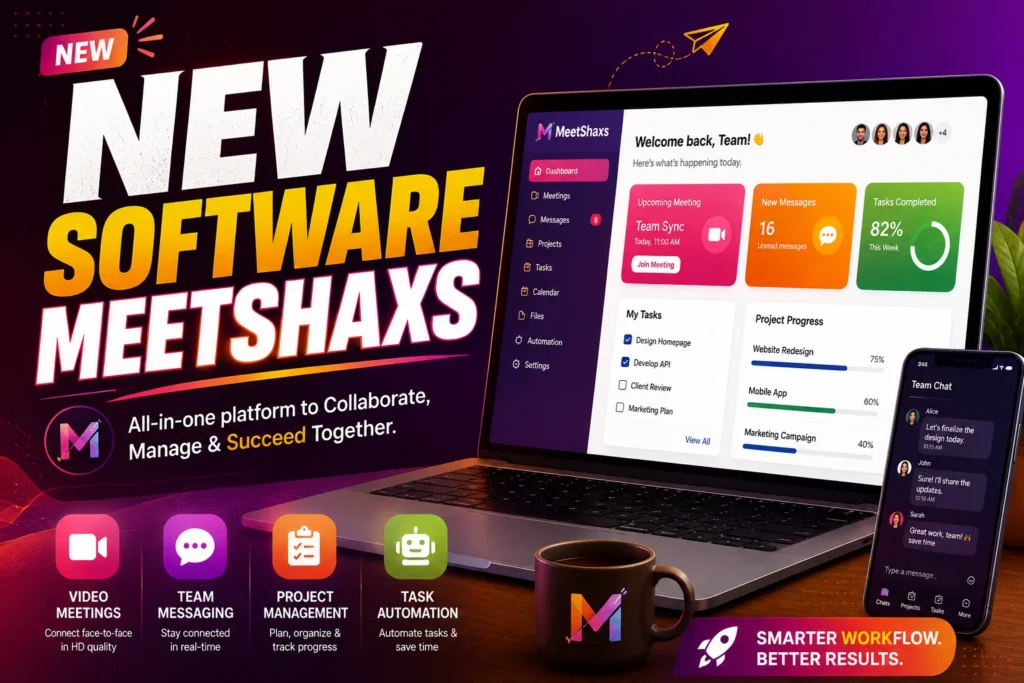
According to one MeetShaxs product description, the platform includes a centralized dashboard called a Nexus Dashboard. It is described as showing projects, tasks, workloads, and important business metrics in one place. The same source also describes customizable information so teams can prioritize the metrics they consider important. Such a dashboard could be useful for managers who want a quick overview of ongoing work. However, these capabilities are reported by MeetShaxs-related content and should not be treated as independently verified specifications. Users should confirm the current interface and available features directly through official product documentation before relying on them.
The same description also reports workflow automation, contextual collaboration, and predictive analytics. Workflow automation is presented as a way to trigger actions when certain events occur. Contextual collaboration keeps conversations connected to specific projects or tasks, while predictive reporting is described as identifying possible future problems. These concepts are common in modern business software, but their actual quality depends on implementation. For example, automation is valuable only when rules work reliably. Predictive analytics also depends on useful data and sensible models. Businesses should therefore test important functions rather than assuming that a feature name guarantees a particular result.
Meetshaxs for Team Productivity
A major reported purpose of new software Meetshaxs is improving workplace productivity. Teams can lose time when information is spread across multiple applications. A centralized system may reduce the need to search through different tools for project details. The MeetShaxs description specifically discusses combining tasks, communication, data, and automation within one platform. For a small team, this could make daily work easier if the platform genuinely supports the team’s existing process. However, productivity depends on adoption. Even excellent software will not help much if employees find it confusing or continue managing important work outside the system.
The best way to evaluate productivity software is to measure a specific problem. For example, a team might track how long it takes to prepare a weekly project update before and after implementation. Another useful measure could be the number of missed tasks, duplicate updates, or manual data transfers. These measurements provide stronger evidence than simply saying a tool feels faster. If you are reviewing workplace technology, a productivity software checklist can help compare setup time, collaboration, automation, reporting, security, and support. This practical approach keeps the evaluation focused on outcomes rather than attractive feature descriptions.
 Meetshaxs and Workflow Automation
Workflow automation can be one of the most useful features in business software when implemented properly. Repetitive tasks often consume time without requiring much human judgment. A system might automatically assign a task, send an alert, update a status, or request approval after a specific action. MeetShaxs-related material describes an automation engine intended to handle these types of workflows without requiring users to write code. For teams performing repetitive administrative work, automation could reduce manual effort. Still, automated processes should be tested carefully because an incorrect rule can repeat mistakes at scale.
Good automation starts with a clear process. Before creating a workflow, users should understand the current steps, identify the repetitive parts, and decide where human approval remains necessary. For example, automatically notifying a team member about a completed task is usually low risk. Automatically changing financial records may require stronger controls and review. New software Meetshaxs should therefore be evaluated according to the sensitivity of the workflows it will manage. A business automation guide can help teams identify suitable processes before implementation. Starting with small, reversible automations is often safer than immediately moving every business process into an unfamiliar platform.
Meetshaxs for Collaboration and Remote Teams
Remote teams need clear systems for sharing information because employees cannot always ask questions face to face. MeetShaxs-related material describes contextual collaboration, where conversations can remain connected to the relevant task or project. This approach can make discussions easier to find later. Instead of searching through unrelated messages, a team member may be able to review the conversation alongside the work itself. That can be useful when someone joins a project later or needs to understand why a decision was made. However, the practical value depends on whether the software is easy enough for everyone to use consistently.
Distributed teams should also consider time zones, permissions, notifications, and documentation. Too many alerts can create another source of distraction, while unclear permissions can create security concerns. A collaboration platform should make responsibilities visible without overwhelming employees with unnecessary information. Before adopting new software Meetshaxs, teams can run a small pilot with one project or department. This allows them to test communication habits and identify problems before expanding the system. A pilot also provides useful feedback about onboarding, usability, performance, and integration requirements. Practical testing is especially important when public product documentation remains limited.
Meetshaxs for Product Naming
One unusual description of MeetShaxs focuses on product naming rather than general business operations. According to that page, the platform is designed to guide teams through brainstorming, shortlisting, voting, validation, and final naming decisions. The concept addresses a genuine business problem because product naming can involve many opinions and long discussions. A structured process can make those discussions easier to manage. The reported system also claims to check domains, social handles, and preliminary trademark information. These checks could help teams identify potential problems early, although legal professionals should still handle formal trademark advice and clearance when necessary.
The naming workflow described for MeetShaxs emphasizes moving from many ideas toward a smaller group of practical options. Anonymous voting is presented as one way to reduce the influence of workplace hierarchy or louder personalities. This can be useful because naming decisions are often subjective. However, voting alone should not determine a brand name. Teams should also consider pronunciation, meaning, cultural interpretation, memorability, domain availability, legal risks, and long-term brand flexibility. If this version of MeetShaxs is the product being considered, users should confirm which validation features are currently active before depending on them for an actual commercial launch.
How to Evaluate New Software Meetshaxs
When evaluating new software, start by defining the problem you want to solve. Do you need better project management, fewer manual tasks, improved collaboration, or a structured naming process? The answer determines which MeetShaxs claims are relevant. Next, verify the provider and product documentation. Look for clear explanations of features, pricing, data handling, integrations, and support. Independent reviews can provide useful context, but they should not replace primary documentation. Because current MeetShaxs information appears across different websites with different descriptions, this verification step is particularly important.
Security should also be part of the evaluation. Before uploading sensitive information, check what data the software collects, where information is stored, who can access it, and how accounts are protected. Businesses should also understand how data can be exported if they later stop using the platform. A short trial can reveal practical problems before they become expensive. Test the features your team actually needs, not just the ones shown in promotional material. For new software Meetshaxs, this cautious approach is especially sensible because public information is still developing. Good software evaluation protects both productivity and business data.
Advantages and Limitations to Consider
Potential advantages of MeetShaxs depend on which product description accurately represents the software. The productivity-oriented version may offer centralized work management, automation, collaboration, and analytics. The naming-focused version may help teams organize creative naming sessions and make decisions more systematically. Both concepts address real workplace problems. Centralization can reduce tool switching, while structured decision-making can reduce unproductive discussions. However, these potential advantages should be viewed as reported capabilities rather than guaranteed outcomes. A business should test whether the software actually improves its own processes before making a long-term commitment.
There are also limitations to consider. The biggest issue is the lack of consistent, extensive public documentation. Independent coverage has noted that information about MeetShaxs remains limited compared with established software products. Different websites also describe different purposes for the name. This makes it difficult to establish one definitive feature list. Users should therefore avoid making major decisions based only on search snippets or third-party articles. Confirm the exact product, developer, current features, support options, and security practices first. This does not mean rejecting new software. It simply means evaluating it with the same care given to any important business technology.
Future Potential of Meetshaxs Software
Emerging software can become more useful as developers receive feedback from real users. If MeetShaxs continues development, improvements could potentially include clearer documentation, stronger integrations, better automation, more detailed analytics, and improved user controls. One MeetShaxs article specifically discusses improving software through security-focused development, testing, performance work, and better development practices. These are sensible areas for any growing software product. However, future possibilities should not be confused with confirmed roadmaps. Unless a developer publishes a specific update plan, users should treat predictions as possibilities rather than promises.
The future value of new software Meetshaxs will ultimately depend on execution. A modern interface alone cannot create lasting value. Users need reliability, security, useful features, responsive support, and a clear reason to keep using the product. Strong software should also evolve without making existing workflows unnecessarily difficult. For businesses, this means watching product updates and user feedback after adoption. A small pilot can be expanded when the software proves dependable. If it fails to solve the original problem, there is little reason to continue simply because the product is new. Practical results should always guide long-term technology decisions.
Frequently Asked Questions
What is new software Meetshaxs?
MeetShaxs is an emerging software-related name described online in different ways, including productivity, workflow management, collaboration, and product-naming tools.
Is Meetshaxs a real software platform?
MeetShaxs has an online presence, but public descriptions are inconsistent, so users should verify the exact product and provider before adopting it.
What features does Meetshaxs offer?
Reported features include dashboards, workflow automation, collaboration, analytics, and product-naming tools, depending on the specific MeetShaxs product being described.
Is Meetshaxs suitable for businesses?
It may be useful for certain workflows, but businesses should first test the software and verify security, documentation, support, integrations, and data policies.
Should I trust all Meetshaxs information online?
No. Because public information varies between sources, users should distinguish verified product documentation from third-party claims and promotional descriptions.
Conclusion
The keyword new software Meetshaxs points toward an emerging and somewhat unclear software topic. Current online sources describe MeetShaxs in different ways, including an operational productivity platform and a specialized product-naming solution. Because these descriptions are not fully consistent, users should verify the exact product before trusting feature claims or entering sensitive information. The safest approach is to define your business need, review available documentation, test important features, and evaluate security and support carefully. MeetShaxs may become more clearly established as information and development continue. For now, thoughtful testing and independent verification remain the best ways to decide whether it deserves a place in your workflow.



















Leave a Comment
Your email address will not be published. Required fields are marked with *