
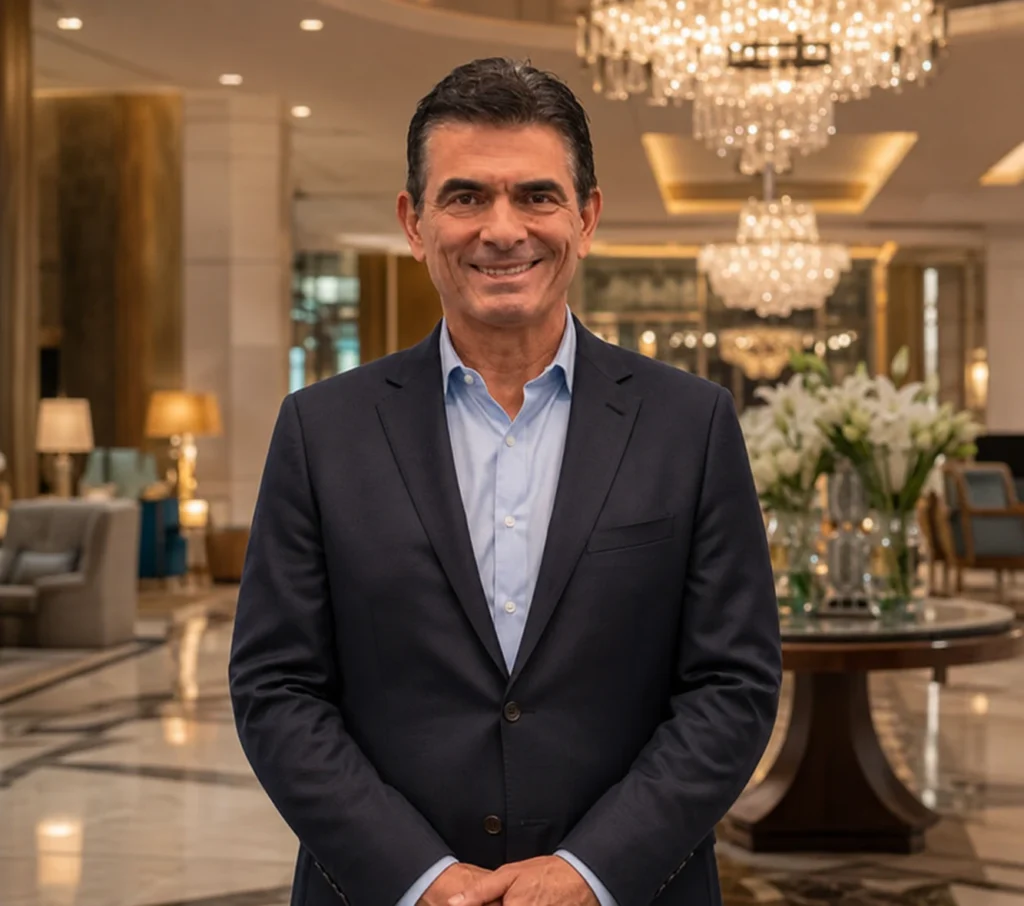
Rodrigo Paz is a Bolivian politician who became president of Bolivia in November 2025. Born in Santiago de Compostela, Spain, on September 22, 1967, he grew up connected to Bolivia through his family and later built a long political career in the country. He is the son of former Bolivian president Jaime Paz Zamora and
Rodrigo Paz is a Bolivian politician who became president of Bolivia in November 2025. Born in Santiago de Compostela, Spain, on September 22, 1967, he grew up connected to Bolivia through his family and later built a long political career in the country. He is the son of former Bolivian president Jaime Paz Zamora and the great-nephew of former president Víctor Paz Estenssoro. Before reaching the presidency, Rodrigo Paz served as a national deputy, Tarija municipal council leader, mayor of Tarija, and senator. His career combines local government experience, economic studies, international relations, and national politics. This article explains his background, career, family, education, and presidency.
Who Is Rodrigo Paz? A brief biography
| Biography Detail | Information |
|---|---|
| Full Name | Rodrigo Paz Pereira |
| Date of Birth | September 22, 1967 |
| Age | 58 years old |
| Birthplace | Santiago de Compostela, Spain |
| Nationality | Bolivian and Spanish |
| Profession | Politician and diplomat |
| Current Position | President of Bolivia |
| Presidential Term | Since November 8, 2025 |
| Political Party | Christian Democratic Party (PDC) |
| Previous Position | Senator for Tarija (2020–2025) |
| Mayor of Tarija | 2015–2020 |
| President of Tarija Municipal Council | 2010–2015 |
| Member of Chamber of Deputies | 2002–2010 |
| Education | American University, Washington, D.C. |
| Father | Jaime Paz Zamora, former President of Bolivia |
| Mother | Carmen Pereira Carballo |
| Spouse | Maria Elena Urquidi |
| Children | 4 |
| Great-Uncle | Víctor Paz Estenssoro, former President of Bolivia |
| Known For | Becoming Bolivia’s 68th president |
| 2025 Election | Won the presidential runoff and defeated Jorge “Tuto” Quiroga |
| Presidency Began | November 8, 2025 |
Rodrigo Paz Early Life and Background
Rodrigo Paz was born on September 22, 1967, in Santiago de Compostela, Spain, while his father was living in political exile. His full name is Rodrigo Paz Pereira. He later developed a strong political connection with Bolivia and built his public career there. His family background is important because his father, Jaime Paz Zamora, served as Bolivia’s president from 1989 to 1993. Rodrigo Paz is also a great-nephew of Víctor Paz Estenssoro, another major Bolivian president. Despite his political family, Paz created his own path through municipal government, parliament, and public service. His life story therefore connects several generations of Bolivian political history.
Rodrigo Paz studied in Jesuit schools in different countries before completing his secondary education at San Ignacio School in La Paz. He later studied economics and international relations and completed a master’s degree in political management at American University in the United States. This educational background helped shape his interest in public policy, economics, and international affairs. Before becoming a major national political figure, he also worked in diplomatic roles during the government of Hugo Banzer. These early experiences gave him exposure to government institutions and foreign relations. They also helped prepare him for the political responsibilities he later accepted in Tarija and at the national level. Read More : Nicole Shanahan: Biography, Career, Philanthropy & Public Life
Rodrigo Paz Political Career
Rodrigo Paz entered electoral politics long before becoming president. He was elected to Bolivia’s Chamber of Deputies representing Tarija and served from 2002 until 2010. His first years in national politics gave him experience with legislation and public institutions. In 2010, he moved into municipal politics in Tarija, where he was elected to the city council. His colleagues later selected him as president of the municipal council. This period was important because local government allowed him to work more directly with community concerns. His political career gradually expanded from legislative work toward practical administration, giving him experience in both national and local public service.
In 2015, Rodrigo Paz won the popular election to become mayor of Tarija, a position he held until 2020. As mayor, he became better known beyond national political circles and gained experience managing a major city. Municipal leadership can require decisions about infrastructure, public services, budgets, transport, and community development. Paz’s years in Tarija therefore became an important part of his political profile. After leaving the mayor’s office, he entered the national Senate and represented Tarija from 2020 to 2025. His move from city government to the Senate strengthened his national presence and positioned him for a later presidential campaign.
Rodrigo Paz Presidential Election
Rodrigo Paz ran for president in Bolivia’s 2025 election as a candidate of the Christian Democratic Party. His campaign gained attention as voters faced serious economic and political challenges. In the first round, Paz finished first and advanced to a runoff against former president Jorge Quiroga. He then won the second round with about 54.5 percent of the vote, according to the political profile published by CIDOB. His victory marked a major political change after nearly two decades of left-wing national governments. Paz presented himself as a centrist reformer who supported social programs while also promoting private investment, economic growth, and closer international cooperation.
Rodrigo Paz took office as president of Bolivia on November 8, 2025. The official Bolivian presidency identifies him as the country’s president and records his earlier roles as deputy, Tarija council leader, mayor, and senator. His inauguration began a new period in Bolivian politics after the long dominance of the Movement for Socialism. As president, Paz inherited major economic pressures, including fuel shortages, limited access to foreign currency, and concerns about public finances. His government has focused on economic stabilization and reforms while trying to protect social support. The balance between reducing state costs and meeting public needs remains one of his administration’s central challenges.
Rodrigo Paz Economic Policies
Economic policy is one of the most important parts of Rodrigo Paz’s presidency. During his campaign, he supported measures intended to encourage small businesses and private investment while questioning the sustainability of some state-owned companies. Reuters reported that his plans included tax incentives for small businesses, possible closure of unprofitable state firms, and efforts to maintain welfare payments. These ideas reflect his attempt to combine market-oriented reforms with social protection. However, economic reform can be difficult when households are already facing higher costs and shortages. For Paz, improving public finances, restoring confidence, and supporting ordinary families are closely connected goals that require careful implementation.
Bolivia’s economic difficulties have also created political pressure for Rodrigo Paz. In 2026, protests and road blockades became a major challenge for his government, with economic grievances contributing to widespread unrest. Reports linked the tension to issues including fuel prices, inflation, and the government’s decision to end fuel subsidies. The situation shows how difficult economic reform can become when policy changes affect daily life. Paz has responded by reshaping parts of his government and seeking broader dialogue. His administration must therefore manage two connected tasks: stabilizing the economy and maintaining public confidence. The results will influence how Bolivians judge his presidency over time.
 Rodrigo Paz Family and Personal Life
Rodrigo Paz comes from a prominent Bolivian political family, but his own career includes more than his family name. His father, Jaime Paz Zamora, was president of Bolivia from 1989 to 1993, while his great-uncle Víctor Paz Estenssoro was also a former president. Rodrigo Paz is married to María Elena Urquidi Barbery, according to the official Bolivian presidency. The couple has four children named Catalina, Alicia, Paulino, and Elena. Public information about his family is more limited than information about his political career. For readers searching for Rodrigo Paz family details, it is useful to separate confirmed official information from unverified claims circulating online.
Rodrigo Paz’s family history helps explain why his name was already familiar in Bolivian political circles. However, his rise to the presidency also followed years of elected public service. He worked as a legislator, municipal council leader, mayor, and senator before winning the national election. This background gives his biography a broader context than a simple story about political inheritance. His personal life has generally received less public attention than his government work. Readers interested in his background can also explore our related Bolivia politics guide and Bolivian presidents timeline for additional historical context. These resources can help explain how Paz fits into the country’s changing political landscape.
Rodrigo Paz Political Position and Leadership
Rodrigo Paz’s political identity has developed through several stages rather than one simple ideology. He began his career in a political environment connected to his father and later worked with different political groups. Over time, he became associated with a centrist and reform-oriented position. His 2025 campaign emphasized economic modernization, private-sector activity, social support, and stronger international relationships. This combination helped him attract voters who wanted change without abandoning every social program. His political approach has also drawn criticism from opponents who question the pace and impact of his reforms. Understanding his position requires looking at both his campaign promises and the policies his government has actually pursued.
Rodrigo Paz has also placed importance on Bolivia’s relationships with other countries and international institutions. During his presidential campaign, he supported stronger ties with Western nations and discussed the need to address Bolivia’s growing debt pressures. Reuters reported that he sought engagement with institutions such as the International Monetary Fund and the World Bank. Foreign policy can matter greatly for Bolivia because international cooperation may affect financing, trade, investment, and access to resources. At the same time, closer relationships with outside institutions can become politically sensitive. Paz therefore faces the challenge of seeking international support while explaining how those agreements can benefit Bolivian citizens and protect national interests.
Rodrigo Paz Presidency and Challenges
For people searching for Rodrigo Paz biography information, his political timeline offers a clear way to understand his rise. He entered the Chamber of Deputies in 2002, moved into Tarija municipal politics in 2010, became mayor in 2015, served as senator from 2020, and reached the presidency in 2025. This progression shows a career built over more than two decades. His experience is not limited to national campaigns because he has also managed local government and participated in legislative work. That combination is useful when evaluating his leadership style. Readers can also explore our related Bolivian politics coverage for broader historical context and our president biography section for comparisons.
Rodrigo Paz faces several practical challenges as president, including economic instability, political opposition, public protests, and pressure to deliver campaign promises. Bolivia’s fuel situation and inflation have made everyday economic concerns especially important. At the same time, reforms can require decisions that are unpopular in the short term but intended to improve public finances later. His government also operates within a political system where cooperation with lawmakers and social groups can be essential. These conditions mean that success cannot be measured by one announcement alone. It will depend on whether policies improve economic stability, public services, investment, employment, and trust while limiting social costs.
Why Rodrigo Paz Matters in Bolivia
The presidency of Rodrigo Paz represents a significant change in Bolivia’s recent political direction. He entered office after a long period dominated by left-wing governments and promised a more centrist approach to economic management and international relations. His background as a mayor, senator, and former deputy gives him experience across several levels of government. Yet governing a country during economic difficulty is very different from campaigning for office. His record will ultimately be judged by measurable outcomes, not only by political labels. For readers following Bolivia, Rodrigo Paz remains an important figure to watch because decisions made during his administration could shape the country’s economy and politics for years.
His presidency is also important because it combines political change with difficult economic conditions. Bolivia is dealing with questions about fuel availability, public finances, foreign currency, inflation, and the future role of state-owned enterprises. At the same time, citizens expect stable public services and protection from sudden economic hardship. Paz must therefore make decisions that balance reform with social needs. His background in local and national government may help him understand different levels of public administration. However, experience alone cannot guarantee results. The success of his administration will depend on implementation, cooperation, transparency, and the ability to respond effectively when policies create unexpected problems.
Frequently Asked Questions About Rodrigo Paz
Who is Rodrigo Paz?
Rodrigo Paz Pereira is a Bolivian politician who became president of Bolivia on November 8, 2025. He previously served as a national deputy, Tarija municipal council leader, mayor of Tarija, and senator. He is the son of former president Jaime Paz Zamora and has a background in economics, international relations, and political management.
When was Rodrigo Paz born?
Rodrigo Paz was born on September 22, 1967, in Santiago de Compostela, Spain. He was born while his father was living in political exile during Bolivia’s period of military dictatorships. He later established his political career in Bolivia and became involved in municipal, legislative, and national politics.
Who is Rodrigo Paz’s father?
Rodrigo Paz’s father is Jaime Paz Zamora, who served as president of Bolivia from 1989 to 1993. Rodrigo is also a great-nephew of former Bolivian president Víctor Paz Estenssoro. His family has therefore played a notable role in Bolivia’s modern political history.
When did Rodrigo Paz become president?
Rodrigo Paz became president of Bolivia on November 8, 2025. He won the 2025 presidential runoff against Jorge Quiroga, receiving approximately 54.5 percent of the vote. His victory ended nearly two decades of national government dominated by the Movement for Socialism.
What challenges does Rodrigo Paz face?
Rodrigo Paz faces major economic and political challenges, including inflation, fuel pressures, public finances, protests, and opposition to some reforms. His government is attempting to stabilize the economy while maintaining social support. The balance between economic reform and public needs remains central to his presidency.
Conclusion
Rodrigo Paz has built a long political career that moved from parliament and Tarija’s city government to Bolivia’s presidency. His family history gives him a notable place in Bolivian politics, but his own public service record includes years of elected leadership. Since taking office in November 2025, he has faced serious economic pressure, public protests, and difficult policy choices. His government is trying to balance economic reform, private investment, international cooperation, and social protection. Understanding Rodrigo Paz therefore requires more than knowing his title. It means looking at his education, political experience, election victory, policy goals, and the challenges facing Bolivia today. For more context, explore our latest Bolivia politics coverage.



















Leave a Comment
Your email address will not be published. Required fields are marked with *